Getting Started

Here are the questions that will be addressed in this section:
1) What kinds of opportunities exist for historians outside of academia?
2) Should I tell my adviser that I am considering leaving academia?
3) How do I contact people and what is an informational interview?
4) How should I use list serves and social networking sites?
5) Can historians outside of the academy be scholars?
6) Can life outside of academia truly be intellectually rewarding?
7) Was all that time I spent in graduate school a waste?
8) Why didn't I get an academic job?
9) What are positive reasons for leaving academia?
10) If I leave academia, does that mean I can never return?
11) I am miserable. Should I leave graduate school before finishing my PhD?
12) Should I apply for an internship?
13) Should I apply for a post-doctoral fellowship?
14) What can I do while I am still in graduate school to make me a better job candidate on both the academic and non-academic job markets?
15) Should I consider additional schooling?
16) Will having a PhD hurt me on the job market?
17) Should I hire a career counselor?
1) What kinds of opportunities exist for historians outside of academia?
2) Should I tell my adviser that I am considering leaving academia?
3) How do I contact people and what is an informational interview?
4) How should I use list serves and social networking sites?
5) Can historians outside of the academy be scholars?
6) Can life outside of academia truly be intellectually rewarding?
7) Was all that time I spent in graduate school a waste?
8) Why didn't I get an academic job?
9) What are positive reasons for leaving academia?
10) If I leave academia, does that mean I can never return?
11) I am miserable. Should I leave graduate school before finishing my PhD?
12) Should I apply for an internship?
13) Should I apply for a post-doctoral fellowship?
14) What can I do while I am still in graduate school to make me a better job candidate on both the academic and non-academic job markets?
15) Should I consider additional schooling?
16) Will having a PhD hurt me on the job market?
17) Should I hire a career counselor?
1) What kinds of opportunities exist for historians outside of academia?

You can walk through the archway
There are many opportunities for historians outside of academia. However, you do need to be creative and aggressive when marketing yourself.
Begin by breaking down your skills. Are you a specialist in a specific geographic region and, if so, does this entail specific linguistic skills? Are you an historian of science and do you have a background in or rudimentary understanding of a scientific field? Are you a gender historian? Does your work use legal documents? Does your dissertation focus on political issues? The opportunities which are available should reflect your skills---for example, if you are a women's historian, look at organizations which cater to women's issues. If you specialize in a specific region, look at businesses which work in those regions.
To learn about careers which are very suited to academics, you may want to look at the various guest discussions hosted by Wrk4Us. These discussions may be somewhat dated today, they are still a great beginning. We also recommend that if your university provides premium content on the Versatile PhD that you look at the discussions held there as well.
While opportunities will vary depending on your specific skills, there are some career paths which are especially suited for historians. These are consultants, policy analysts, speechwriters, intelligence officers, curators, museum educators, lobbyists, managers of historical sites, editors, and reporters.
Do not, however, limit yourself to these professions. Think broadly and learn as much as you can about a range of opportunities.
2) Should I tell my adviser I am considering leaving academia?

What is your relationship like?
This really depends on your adviser and your relationship with him or her. Some advisors can be extraordinarily sympathetic. Other advisors can be less sympathetic and they may be reluctant to write glowing recommendations if they feel that you are ambivalent about remaining in academia. They may also become unwilling to read your dissertation as it progresses.
Carefully assess your relationship with your advisor and make the determination based on that. If you have several advisors and feel only one is trustworthy, ask the person you tell to keep this in confidence.
However, you should be aware that leaving academia is your decision. It is never your advisor's decision. While he or she may express displeasure or sadness at your decision to leave academia, you must do what is right for you---not what is right for your advisor.
3) How do I contact people and what's an informational interview?
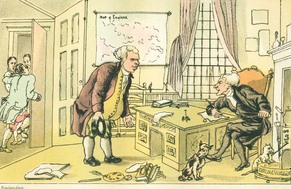
Learn what goes on behind closed doors.
Networking allows you to meet the people who are hiring---before they begin the hiring process. This can give you an incredible advantage when applying for jobs.
Use the Career Office of your graduate and undergraduate schools. Ask to look at their reference guides as well as their lists of graduates who work in professions which interest you.
Look up the organizations, individuals, and agencies which match your interests on the web. Most of these organizations will list contact people (if they do not, call the organization and ask for the email of the person whose interests match yours).
Because informational interviewing is a relatively common practice outside of the academy, people will almost always take your request for an informational interview in stride. In fact, the person to whom you send your request probably did several informational interviews when she was looking for a job herself.
Send the person a short email explaining who you are and asking if you can speak with them about the work they do (never ask directly about job opportunities). If at all possible, try to meet with the individual in person. Most people are flattered to be asked and, unless their schedule is very busy, you should be able to meet with them for 30 minutes or an hour.
When contacting people, use formal methods of address (i.e. Ms. Frinkle, Dr. Jellabow or Director Snickleby). While the world has become more informal and many people are comfortable being addressed by their first name, you should be aware that some people still prefer to be addressed formally, especially at the beginning of a relationship. Additionally, be aware that when someone is listed formally in a staff directory or elsewhere as Edward J. Snicklebee, you do not know if that person prefers being addressed by his full name (Edward), his nickname (Ned), his middle name (James), his initials (E.J.) or even a variant of his last last name (Snicks). As a result, it is always best to begin a relationship with a formal mode of address and allow the other person to steer you to the name they prefer to use.
During the informational interview, ask about the profession, what it entails and how one enters the field. Obtaining information about a field and learning how to position yourself for a job is the goal of an informational interview. Although you will hear of people obtaining jobs through informational interviews, be wary of assuming that your informational interview with a specific organization will lead to a job offer. The point of an informational interview is simply to obtain information which will assist you in deciding whether a field will suit your interests, what skills you need to enter that field, how you should structure your resume for that field, and where you can find advertisements for jobs in that profession.
Before you arrive at the interview, take time to re-write your resume to reflect the skills and experiences which are valued in the field you are hoping to enter. Keep the resume brief (two pages) and avoid listing every academic prize or paper you have published unless you can demonstrate the relevance of the prize or paper to the field which you are trying to enter. Always bring a resume to the interview and ask for suggestions as to how you can sharpen your resume for positions in that person's field.
The person who helps you has taken time out of his or her busy schedule to meet with you---you must send them a thank you note. Send the note promptly (within the week following the interview). Not sending a thank you note indicates a failure to understand good business etiquette and it will make many people deeply reluctant to refer you for a position which may be opening up (they do not want to recommend people who do not possess good social skills).
Finally, even when someone is unable to assist you, send them a thank you note for considering this. This is very important---as it demonstrates clearly that you possess good social/professional skills. Additionally, this type of note will make people more eager to assist you if they do discover a way to help you in the future.
Use the Career Office of your graduate and undergraduate schools. Ask to look at their reference guides as well as their lists of graduates who work in professions which interest you.
Look up the organizations, individuals, and agencies which match your interests on the web. Most of these organizations will list contact people (if they do not, call the organization and ask for the email of the person whose interests match yours).
Because informational interviewing is a relatively common practice outside of the academy, people will almost always take your request for an informational interview in stride. In fact, the person to whom you send your request probably did several informational interviews when she was looking for a job herself.
Send the person a short email explaining who you are and asking if you can speak with them about the work they do (never ask directly about job opportunities). If at all possible, try to meet with the individual in person. Most people are flattered to be asked and, unless their schedule is very busy, you should be able to meet with them for 30 minutes or an hour.
When contacting people, use formal methods of address (i.e. Ms. Frinkle, Dr. Jellabow or Director Snickleby). While the world has become more informal and many people are comfortable being addressed by their first name, you should be aware that some people still prefer to be addressed formally, especially at the beginning of a relationship. Additionally, be aware that when someone is listed formally in a staff directory or elsewhere as Edward J. Snicklebee, you do not know if that person prefers being addressed by his full name (Edward), his nickname (Ned), his middle name (James), his initials (E.J.) or even a variant of his last last name (Snicks). As a result, it is always best to begin a relationship with a formal mode of address and allow the other person to steer you to the name they prefer to use.
During the informational interview, ask about the profession, what it entails and how one enters the field. Obtaining information about a field and learning how to position yourself for a job is the goal of an informational interview. Although you will hear of people obtaining jobs through informational interviews, be wary of assuming that your informational interview with a specific organization will lead to a job offer. The point of an informational interview is simply to obtain information which will assist you in deciding whether a field will suit your interests, what skills you need to enter that field, how you should structure your resume for that field, and where you can find advertisements for jobs in that profession.
Before you arrive at the interview, take time to re-write your resume to reflect the skills and experiences which are valued in the field you are hoping to enter. Keep the resume brief (two pages) and avoid listing every academic prize or paper you have published unless you can demonstrate the relevance of the prize or paper to the field which you are trying to enter. Always bring a resume to the interview and ask for suggestions as to how you can sharpen your resume for positions in that person's field.
The person who helps you has taken time out of his or her busy schedule to meet with you---you must send them a thank you note. Send the note promptly (within the week following the interview). Not sending a thank you note indicates a failure to understand good business etiquette and it will make many people deeply reluctant to refer you for a position which may be opening up (they do not want to recommend people who do not possess good social skills).
Finally, even when someone is unable to assist you, send them a thank you note for considering this. This is very important---as it demonstrates clearly that you possess good social/professional skills. Additionally, this type of note will make people more eager to assist you if they do discover a way to help you in the future.
4) How should I use social networking and list serves?

Networking the old-fashioned way.
List serves and social networking sites can be fantastic resources both for job listings and, more simply, for learning about various fields.
Two of the best list serves for historians are The Versatile PhD and H-Public. Both list jobs and members on both sites routinely discuss topics which are relevant to practicing history outside the academy. People on these list serves are practicing professionals who can answer your questions about specific fields.
LinkedIn can be a great resource, if you join the various groups which deal with the practice of history (don't just put your profile and think that is all you need to do, in other words). Joining LinkedIn groups such as the National Trust for Historic Preservation or various museum groups will enable you to listen in as professionals in these fields discuss topics related to the profession. And, of course, these different groups also often list jobs. Joining some of these organizations (such as the National Council on Public History) may require that you become a paid member of the organization. Carefully research these organizations to determine those which fit your interests.
Two of the best list serves for historians are The Versatile PhD and H-Public. Both list jobs and members on both sites routinely discuss topics which are relevant to practicing history outside the academy. People on these list serves are practicing professionals who can answer your questions about specific fields.
LinkedIn can be a great resource, if you join the various groups which deal with the practice of history (don't just put your profile and think that is all you need to do, in other words). Joining LinkedIn groups such as the National Trust for Historic Preservation or various museum groups will enable you to listen in as professionals in these fields discuss topics related to the profession. And, of course, these different groups also often list jobs. Joining some of these organizations (such as the National Council on Public History) may require that you become a paid member of the organization. Carefully research these organizations to determine those which fit your interests.
5) Can historians outside of academia still be scholars?

You can be a scholar in Timbuktu.
Absolutely.
You may need to be a bit creative about finding time to do your research and write but this is true in academia as well (where heavy teaching loads and committee work can make research difficult). Most organizations provide at least two weeks vacation (some provide much more) and you can easily use this time to travel to archives or research libraries. Additionally, some employers will provide their workers with unpaid leave. In this case, you can take some time to research and write. Working 9-5 creates a structured day and can help you be more focused in your writing. Unlike in academia where weekends and evenings are sometimes taken up with grading papers, historians outside of the academy have more structured time for writing.
Contrary to popular belief, there is a strong and active community of independent scholars. Independent scholars routinely publish work with leading academic presses (Oxford, University of California etc.) and they also frequently speak at national and international conferences. The work produced by independent scholars, especially those with a PhD, is on a level with that produced by academics. Check out the website of the National Coalition for Independent Scholars for more information. And if you need further reassurance, check out the profiles in Real Jobs, Real Historians. Many of the historians we have profiled have published work as independent scholars. And many of these historians routinely participate in historic conferences.
Because being outside the academy broadens your horizons, it can sometimes provide you with a new and different persepective. And this perspective may lead you to approach your research in a radically different way. For an example of this, read Alex Pang's thoughtful essay, Journeyman, in which he discusses how encounters with people outside the academy brought a new perspective to his research and led him to understand and view his own historical research differently.
Next time you receive a journal, check the authors' biographies. You may be surprised to learn that many of the historians whose work you routinely read and enjoy work outside of academia.
6) Can life outside of academia truly be intellectually rewarding?

Want to visit museums frequently? You still can.
.
We were reluctant to put this question on our website because the answer seems to be so obvious. But having read countless essays, blogs, and articles in which academics loudly proclaim that their low-paying adjunct position is worth it even though it makes them miserable because it is the only place where they can enjoy the "life of the mind," we feel that we must address this issue.
The answer is: life outside of academia can be more intellectually rewarding than it is inside academia. Do you love to read? Guess what! You can do that outside of academia (you can even afford to buy the books you want outside of academia). Do you love to visit museums? Hear lectures? Travel to visit Gothic cathedrals? You can do all these things outside of academia---and because you will have a choice as to where you live, you can suit your lifestyle to reflect your interests.
Moreover, contrary to the belief of most academics, a good and challenging job will always provide you with interesting and well-read colleagues. We have found that we met people with broader and deeper interests outside academia than we met inside academia where the emphasis tends to be on narrow specialization.
We were reluctant to put this question on our website because the answer seems to be so obvious. But having read countless essays, blogs, and articles in which academics loudly proclaim that their low-paying adjunct position is worth it even though it makes them miserable because it is the only place where they can enjoy the "life of the mind," we feel that we must address this issue.
The answer is: life outside of academia can be more intellectually rewarding than it is inside academia. Do you love to read? Guess what! You can do that outside of academia (you can even afford to buy the books you want outside of academia). Do you love to visit museums? Hear lectures? Travel to visit Gothic cathedrals? You can do all these things outside of academia---and because you will have a choice as to where you live, you can suit your lifestyle to reflect your interests.
Moreover, contrary to the belief of most academics, a good and challenging job will always provide you with interesting and well-read colleagues. We have found that we met people with broader and deeper interests outside academia than we met inside academia where the emphasis tends to be on narrow specialization.
7) Was all that time I spent in graduate school a waste?

This would have been a waste of time.
Forty years ago, the pursuit of a doctorate was a form of vocational training and earning a PhD would, more often than not, result in a job as a professor. Obviously, that is no longer true today.
That said, you should not assume that obtaining your PhD will fail to help you on the job market. Even if you had spent seven years pursuing your passion as a rock-climber, you would have accumulated skills which would be of use to you on the job market. Think seriously about the tasks which you accomplished as a graduate student and/or as a professor and the skills which you gained. These are the tools which will enable you to find a good and satisfying career and to succeed in that career.
Overall, how should you view your graduate training?
View it as a wonderful opportunity to pursue subjects in which you were and remain passionately interested. Not many people have the opportunity to spend several years following their passion---count yourself lucky that you had this opportunity. If you accumulated debt doing this, compare yourself to someone who just took out a mortgage or bought a luxury car. Yes, it may not have been the wisest financial move but, for better or worse, you bought a luxury item which brought you enjoyment.
And finally, a word of caution. Potential employers may ask you why you obtained your graduate degree; you need to be prepared to answer their questions about your education positively. Do not tell the employer about the academic job market and your attempts to obtain an academic job. Employers are not interested; moreover, in this crowded job market, employers who have a wide choice among applicants will prefer to hire employees who are enthusiastic about a new career, not mourning an academic career.
That said, you should not assume that obtaining your PhD will fail to help you on the job market. Even if you had spent seven years pursuing your passion as a rock-climber, you would have accumulated skills which would be of use to you on the job market. Think seriously about the tasks which you accomplished as a graduate student and/or as a professor and the skills which you gained. These are the tools which will enable you to find a good and satisfying career and to succeed in that career.
Overall, how should you view your graduate training?
View it as a wonderful opportunity to pursue subjects in which you were and remain passionately interested. Not many people have the opportunity to spend several years following their passion---count yourself lucky that you had this opportunity. If you accumulated debt doing this, compare yourself to someone who just took out a mortgage or bought a luxury car. Yes, it may not have been the wisest financial move but, for better or worse, you bought a luxury item which brought you enjoyment.
And finally, a word of caution. Potential employers may ask you why you obtained your graduate degree; you need to be prepared to answer their questions about your education positively. Do not tell the employer about the academic job market and your attempts to obtain an academic job. Employers are not interested; moreover, in this crowded job market, employers who have a wide choice among applicants will prefer to hire employees who are enthusiastic about a new career, not mourning an academic career.
8) Why didn't I get an academic job and does that mean I am a failure?

Don't accept others' views of you.
The academic job market is in a state of collapse and has been since the 1970s. The crisis shifts each decade to become slightly different but make no mistake: this is not a new crisis.
Because its roots are so deep it is unlikely that this crisis will be addressed soon. It also means that many people have been in the same position that you have been.
You may have outstanding credentials but this will do little to alter the fact that there are very few jobs. Academic search committees can pick and choose among an outstanding array of candidates; as a result, they can and often do take into consideration a range of random factors. There is no way you can prepare for this and because search committees are often flooded by qualified applicants, they will only rarely discuss the reasons for their decision.
Moreover, even if a search committee tells you that they wanted someone who could teach women's studies and they nixed your application for that reason, another department may want someone who can hold a joint appointment in the economics department. In other words, the qualifications for one job are rarely ever the qualifications for another job and as search committees rarely ever clarify (or even know) what they want, you can not prepare for this.
You may feel you nailed the interview (and you probably did) but unbeknownst to you, the department decided to go with the applicant whose dissertation paralleled that of the department chair or they went with the applicant who had family in the area. To put it very bluntly, the academic job market has become a lottery with many qualified (and over-qualified) applicants vying for one winning ticket. If you bought a lottery ticket with 100 other people, would you regard yourself as a failure if your ticket didn't win? Would you insist that you deserved to win? Or if the winner was a woman or a minority, would you insist that it was because of "affirmative action" that you failed to win? Think about the market in these terms.
Sadly, there is no "winning" formula for obtaining an academic job. There are countless PhDs with books, degrees from top-ranked universities, teaching awards etc. who did not obtain a tenure-track position. These people are not failures! In fact, they are success stories. They have published thought-provoking books, they earned degrees through effort and hard work, and they have won awards for teaching. Yes, they didn't get a tenure-track position but when compared to the overall list of their accomplishments, this is one (and sometimes the only) task in which they did not obtain that which they wanted (and for the above reasons, their inability to obtain an academic position had nothing to do with their abilities or efforts). Very few people have track records like that!
Because its roots are so deep it is unlikely that this crisis will be addressed soon. It also means that many people have been in the same position that you have been.
You may have outstanding credentials but this will do little to alter the fact that there are very few jobs. Academic search committees can pick and choose among an outstanding array of candidates; as a result, they can and often do take into consideration a range of random factors. There is no way you can prepare for this and because search committees are often flooded by qualified applicants, they will only rarely discuss the reasons for their decision.
Moreover, even if a search committee tells you that they wanted someone who could teach women's studies and they nixed your application for that reason, another department may want someone who can hold a joint appointment in the economics department. In other words, the qualifications for one job are rarely ever the qualifications for another job and as search committees rarely ever clarify (or even know) what they want, you can not prepare for this.
You may feel you nailed the interview (and you probably did) but unbeknownst to you, the department decided to go with the applicant whose dissertation paralleled that of the department chair or they went with the applicant who had family in the area. To put it very bluntly, the academic job market has become a lottery with many qualified (and over-qualified) applicants vying for one winning ticket. If you bought a lottery ticket with 100 other people, would you regard yourself as a failure if your ticket didn't win? Would you insist that you deserved to win? Or if the winner was a woman or a minority, would you insist that it was because of "affirmative action" that you failed to win? Think about the market in these terms.
Sadly, there is no "winning" formula for obtaining an academic job. There are countless PhDs with books, degrees from top-ranked universities, teaching awards etc. who did not obtain a tenure-track position. These people are not failures! In fact, they are success stories. They have published thought-provoking books, they earned degrees through effort and hard work, and they have won awards for teaching. Yes, they didn't get a tenure-track position but when compared to the overall list of their accomplishments, this is one (and sometimes the only) task in which they did not obtain that which they wanted (and for the above reasons, their inability to obtain an academic position had nothing to do with their abilities or efforts). Very few people have track records like that!
9) If I leave academia, does that mean I can never return?
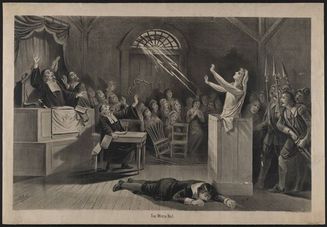
Not a death sentence. Really. We aren't in Salem.
Leaving academia is not a death sentence. Take it from us: many people have left academia, worked in other professions and then returned to academia.
In fact, depending on the position you get, leaving academia can actually enhance your CV and enable you to return to the academic job market as a stronger candidate. If, for example, you leave academia and obtain a position at a think tank, you will have an opportunity to work on projects which strengthen your research skills and add to your publications. Working as a public historian will also provide you with an opportunity to expand your publications.
Even if you do not enter a profession which encourages research, nothing will prevent you from doing your own research and publishing. A good track record of publications can only help you in a competitive academic job market.
One final note: while returning to academia is always an option, you may find, as many historians have, that you will not want to return to academia once you have experienced the very different work environment of the "real world."
In fact, depending on the position you get, leaving academia can actually enhance your CV and enable you to return to the academic job market as a stronger candidate. If, for example, you leave academia and obtain a position at a think tank, you will have an opportunity to work on projects which strengthen your research skills and add to your publications. Working as a public historian will also provide you with an opportunity to expand your publications.
Even if you do not enter a profession which encourages research, nothing will prevent you from doing your own research and publishing. A good track record of publications can only help you in a competitive academic job market.
One final note: while returning to academia is always an option, you may find, as many historians have, that you will not want to return to academia once you have experienced the very different work environment of the "real world."
10) What are some positive reasons for leaving academia?

Yes, there are great reasons for leaving!
Historians can often accomplish more outside of academia than inside academia. Public historians, policy analysts, and many government officials who possess PhDs can do more to influence policy decisions in a week than most academic historians do in a lifetime. Additionally, historians who are in the public eye (whether they are in the profit or non-profit sector) demonstrate to legislators and the general public the importance of a training in history. As it is legislators and the voting public who determine the funding for history programs, this type of contact does a great deal to advance the cause of history.
Historians outside of the university setting often work with people who genuinely love history. While working with undergraduates and graduate students can be rewarding, non-academic historians tend to encounter people who are choosing, long after they have left school, to pursue history on their own.
And finally, within the university setting, history can be extremely theoretical and abstract. Outside of a university setting, people use history---to influence policy decisions, to understand why an event occurred and what the ramifications will be if a tradition is changed etc. This can be extremely exciting.
To get a full understanding of the range of positive experiences people have had when leaving academia, we also suggest that you look at the profiles in Real Historians, Real Jobs.
11) I'm very unhappy in graduate school, should I leave?
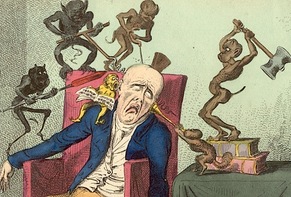
Don't spend years being miserable.
No one can answer this question for you. However, there are some issues which you may want to bear in mind as you explore this question.
Begin by looking at the question of careers: are you interested in a career which would require an advanced degree? Some jobs outside of academia actually do require a PhD or, if they don't require a PhD, a PhD may be necessary if you want to move into a management position. Conversely, you may find that a PhD is completely irrelevant to the position.
To ascertain whether the PhD will be beneficial to your future career, do multiple informational interviews with people in the occupations which you would like to enter. Tell these people that you are ambivalent about completing the degree and ask them what they would suggest based on their knowledge of the field.
Along with thinking about your future career, you should assess your own character. Ask yourself whether you (as opposed to your advisor or fellow students) feel completing your PhD is important or whether in believing that this is important, you are simply reflecting and responding to the culture in which you are living.
Additionally, take time to assess honestly how long completing your program will entail and ask yourself whether you are prepared to make this committment in time or not.
And finally because this is a difficult decision, you may want to take a semester off. Working outside of academe may provide you with the information you need to make a decision which is right for you and your future career.
12) Are internships worth it and how can I get one?

Think of it as an apprenticeship.
Internships are almost always worth the investment as they will give you an opportunity to expand your skills and discover what certain professions entail. Internships can not only provide you with exposure to jobs outside the academy, they can also help you to meet people who work in the field which you would like to enter. These contacts can ultimately help you to obtain a job (contacts are key---this is true in academia as well as outside of academia), and, of course, a good internship will also teach you very real job skills.
Many summer internships are paying ones and we suggest that you look into these, even if they entail your moving somewhere for a summer. You may discover, especially with an internship which requires you to move somewhere for a summer, that you will manage to simply break even financially but it is worth it in the long term. If you can afford it, take a non-paying internship during the school year. When you are not being paid, you will have a fair amount of freedom to negotiate how much you work and what you do; a year long internship where you work for 8-10 hours a week is very much worth the commitment.
We strongly recommend that all historians, even those who are determined to remain in academia, explore internships while in graduate school. An internship, especially one in a museum, a public history office or an archive, will broaden your understanding of the historical profession and make you a better scholar by exposing you to different types of history, different types of questions, and different approaches to history. If you remain in academia, this knowledge will also better enable you to advise undergraduate majors and graduate students about their career options---and advising students is a fundamental aspect of all academic jobs. In short, an internship can open up an extraordinary number of new and different options, whether you remain in academia or not.
To learn more about internships, read the section here on Beyond Academe that specifically discusses internships. Also read our profiles carefully; many of them got their start through an internship (and yes, even just one internship can make a significance difference when you go on the job market).
Many summer internships are paying ones and we suggest that you look into these, even if they entail your moving somewhere for a summer. You may discover, especially with an internship which requires you to move somewhere for a summer, that you will manage to simply break even financially but it is worth it in the long term. If you can afford it, take a non-paying internship during the school year. When you are not being paid, you will have a fair amount of freedom to negotiate how much you work and what you do; a year long internship where you work for 8-10 hours a week is very much worth the commitment.
We strongly recommend that all historians, even those who are determined to remain in academia, explore internships while in graduate school. An internship, especially one in a museum, a public history office or an archive, will broaden your understanding of the historical profession and make you a better scholar by exposing you to different types of history, different types of questions, and different approaches to history. If you remain in academia, this knowledge will also better enable you to advise undergraduate majors and graduate students about their career options---and advising students is a fundamental aspect of all academic jobs. In short, an internship can open up an extraordinary number of new and different options, whether you remain in academia or not.
To learn more about internships, read the section here on Beyond Academe that specifically discusses internships. Also read our profiles carefully; many of them got their start through an internship (and yes, even just one internship can make a significance difference when you go on the job market).
13) Should I take a post-doctoral fellowship even if I am considering leaving academia?

Intellectual growth is always good.
Post-docs can provide you with a wonderful opportunity to expand your horizons---which is always a good thing.
If you are fortunate enough to be offered a post-doc, you should take it, if you feel it will enable you to advance your professional goals. Use the time to take extra courses (this includes courses in other departments) which will enhance your resume.
It's fine to get a post-doctoral fellowship at a university but if you are considering leaving academia, we also recommend that you look for post-doctoral fellowships at museums (especially the Smithsonian), think tanks, and universities.
You may also want to consider something like The Presidential Management Fellowship program sponsored by the federal government. Technically this is not a post-doctoral fellowship (and it's open to people without PhDs) but it is specifically intended to take highly educated inviduals and introduce them to new opportunities.
14) What can I do while I am in graduate school to make myself more appealing to employers?

Ensure that others will court you.
If you are still doing coursework, you may want to look at classes and opportunities in the different professional schools. For example, if your dissertation deals with legal issues, take or audit a course in the law school. If you are interested in preservation, take a course in architectural history or in preservation law. In other words, try to broaden your experiences and background as much as you can (one of the things which non-academics do not like about academics is their narrowness).
Expand your work experiences. Volunteer for a non-profit; you may be asked to assist in writing grants, to help manage a website or to assist in organizing events. The skills you can learn while volunteering will only enhance your resume. Additionally, the contacts you make while volunteering will assist you when you begin exploring the job market.
Consider a structured internship. An internship can help you determine the kinds of jobs you might enjoy (as well as the kinds of jobs you do not want---an equally important lesson). You may also find that the person under whom you do an internship will be pleased to write you a letter of reference.
We recognize that many graduate students feel that they are too busy to do any of these things while in graduate school but we'll be candid here: your life will probably only get busier in the future (especially if you intend to become a professor). Being in grad school generally allows for a fair amount of flexibility. Assess your schedule honestly: how do you really spend your time? Keeping an honest log for a week or so (in which you track what you are doing in hour or 30 minute increments) can help you to assess how you to spend your time more efficiently and how to determine how much time you can devote to an internship, auditing a class etc.
Reach out to others in your graduate program and university. We suggest that you organize graduate student workshops on grant-writing, teaching or researching. Developing and running a workshop requires management skills which will be highly valued in the workplace; it will also ensure that you learn new skills such as how to write a better grant proposal.Talk to students across disciplines (the contacts you make may help you in the future).
Finally, we strongly urge you to begin reading job ads and speaking to potential employers now even if you are not intending to enter the job market at this time. Reading job ads a year or more before you intend to enter either the academic or non-academic job market, will educate you on the skills and experiences you will need to have when you begin looking for a job. If you begin to acquire these skills now, that will put you ahead of the game when you go on the job market.
Expand your work experiences. Volunteer for a non-profit; you may be asked to assist in writing grants, to help manage a website or to assist in organizing events. The skills you can learn while volunteering will only enhance your resume. Additionally, the contacts you make while volunteering will assist you when you begin exploring the job market.
Consider a structured internship. An internship can help you determine the kinds of jobs you might enjoy (as well as the kinds of jobs you do not want---an equally important lesson). You may also find that the person under whom you do an internship will be pleased to write you a letter of reference.
We recognize that many graduate students feel that they are too busy to do any of these things while in graduate school but we'll be candid here: your life will probably only get busier in the future (especially if you intend to become a professor). Being in grad school generally allows for a fair amount of flexibility. Assess your schedule honestly: how do you really spend your time? Keeping an honest log for a week or so (in which you track what you are doing in hour or 30 minute increments) can help you to assess how you to spend your time more efficiently and how to determine how much time you can devote to an internship, auditing a class etc.
Reach out to others in your graduate program and university. We suggest that you organize graduate student workshops on grant-writing, teaching or researching. Developing and running a workshop requires management skills which will be highly valued in the workplace; it will also ensure that you learn new skills such as how to write a better grant proposal.Talk to students across disciplines (the contacts you make may help you in the future).
Finally, we strongly urge you to begin reading job ads and speaking to potential employers now even if you are not intending to enter the job market at this time. Reading job ads a year or more before you intend to enter either the academic or non-academic job market, will educate you on the skills and experiences you will need to have when you begin looking for a job. If you begin to acquire these skills now, that will put you ahead of the game when you go on the job market.
15) Should I consider additional education?

Heading off for more school?
We do not advocate that you immediately return to school for more training or another degree. Your training as an historian should have provided you with sufficient skills to find a job in most fields.
Be aware, as well, that employers almost always want people who have a balance of education and experience. You already have the education but you may need to obtain more hands-on experiences (in other words, we think it's better to take an internship than to head back to a classroom).
If you are interested in entering a field which requires that you obtain another degree, we strongly recommend, even with this, that you find an internship in this field. Do not, in other words, rush to obtain yet another degree without investigating the field thoroughly; you may be surprised to discover that you do not like the field very much or you may learn that you can find satisfying and well-paying work in that field without investing more time and money in additional education. And finally, some employers pay for the education of their employees-after you put in a few years, your employer may pay you to obtain an MBA, an MPH, an MLS or another degree.
We also want to point out that additional education is not a guarantee of employment. Many PhDs rush to law school, unaware that almost 50% of people with law degrees do not work as lawyers.
Do serious research before you commit to additional education; additionally, factor into your decision to return to school an understanding that you may very well wind up with another degree but not a job. If you are interested in law school, check out this website hosted by the American Bar Association. If you are interested in getting an MLS, check out this website hosted by the American Library Association.
Be aware, as well, that employers almost always want people who have a balance of education and experience. You already have the education but you may need to obtain more hands-on experiences (in other words, we think it's better to take an internship than to head back to a classroom).
If you are interested in entering a field which requires that you obtain another degree, we strongly recommend, even with this, that you find an internship in this field. Do not, in other words, rush to obtain yet another degree without investigating the field thoroughly; you may be surprised to discover that you do not like the field very much or you may learn that you can find satisfying and well-paying work in that field without investing more time and money in additional education. And finally, some employers pay for the education of their employees-after you put in a few years, your employer may pay you to obtain an MBA, an MPH, an MLS or another degree.
We also want to point out that additional education is not a guarantee of employment. Many PhDs rush to law school, unaware that almost 50% of people with law degrees do not work as lawyers.
Do serious research before you commit to additional education; additionally, factor into your decision to return to school an understanding that you may very well wind up with another degree but not a job. If you are interested in law school, check out this website hosted by the American Bar Association. If you are interested in getting an MLS, check out this website hosted by the American Library Association.
16) Will having a PhD hurt me on the non-academic job market?

There is no easy answer to this question. Some employers, it is true, are very reluctant to hire PhDs. Others, however, relish the opportunity to hire PhDs.
Remember: the majority of PhDs in this country do not work in academia which means that many employers do look favorably on PhDs. Tailor your search to accommodate this. Good places to look include: federal, state and local government (where the majority of PhDs work), foundations/think tanks, research and development groups, and consulting organizations.
And finally, remember that while many people say they did not enjoy their high school history classes, the History Channel, the American Experience series on PBS, and the incredible popularity of places like Williamsburg indicate that most Americans actually enjoy history and spend money on history-related products. These organizations need and routinely hire historians.
Remember: the majority of PhDs in this country do not work in academia which means that many employers do look favorably on PhDs. Tailor your search to accommodate this. Good places to look include: federal, state and local government (where the majority of PhDs work), foundations/think tanks, research and development groups, and consulting organizations.
And finally, remember that while many people say they did not enjoy their high school history classes, the History Channel, the American Experience series on PBS, and the incredible popularity of places like Williamsburg indicate that most Americans actually enjoy history and spend money on history-related products. These organizations need and routinely hire historians.
17) Should I use a career counselor?
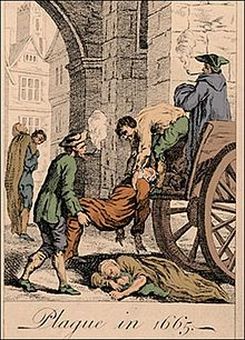
Seriously. Bad career counselors are a plague.
There is no definitive answer to this question.
However, you should be aware that the qualifications of career counselors, career coaches, and vocational counselors are incredibly varied. Some individuals claiming these titles do not have any real qualifications or experiences in this field. So you must always begin by aggressively researching the skills and qualifications of any counselor you are considering hiring. Be wary of anyone who makes promises which seem to be too good to be true (i.e. they can "definitely find you a good job")---those promises are too good to be true! A good career counselor will simply help you to assess your own skills, interests, and career options as you begin to think about your future career.
There are no hard and fast credentials which career counselors must have so you must research---and interview---any career counselor you are considering hiring. We do not endorse any career counselors or any organization associated with this field. We do suggest, however, that you contact the career center at your alma mater (undergraduate or graduate program) and that you speak with them about how to best discover a qualified career counselor in your area. Of course, if you are still in the immediate geographic vicinity of your alma mater, your best option is to use the career center there. Most universities and colleges provide this type of assistance gratis to their alumni.
Even when speaking to a career counselor at your alma mater, ask them directly about assistance they have given to PhDs. Increasingly career counselors at universities and colleges are developing specializations in this area. Similarly, if you do decide to use a career counselor outside of your undergraduate or graduate university/college, ask the counselor point-blank if they have ever worked with people with advanced degrees in history or a related field (i.e. any social sciences field or humanities field).
Finally, be aware that a distinction is usually made between a career counselor and a "head hunter." Head-hunters do work to place individuals in positions (as opposed to career coaches or counselors who generally assist an individual to discover the career in which he or she will thrive). The best and real head-hunters are paid by companies, not by the job seeker. As a result, head-hunters tend to be careful about the clients they accept (they generally will not accept a client who has an unconventional career path, i.e. a recent PhD who is looking for work as a university administrator but has no experience in the field as that client will be harder to place than the individual who has a Phd, publications, and 15 years of experience in this field).
Point blank: anyone who asks you for money to find you a job is not on the up and up. A good career counselor will not make such a blanket statement or promise. Remember 1348 or 1665 and avoid these people like the plague!
If you do decide to invest in a career counselor (i.e. someone to assist you in finding your career passions), always make a decision which reflects your financial situation.
However, you should be aware that the qualifications of career counselors, career coaches, and vocational counselors are incredibly varied. Some individuals claiming these titles do not have any real qualifications or experiences in this field. So you must always begin by aggressively researching the skills and qualifications of any counselor you are considering hiring. Be wary of anyone who makes promises which seem to be too good to be true (i.e. they can "definitely find you a good job")---those promises are too good to be true! A good career counselor will simply help you to assess your own skills, interests, and career options as you begin to think about your future career.
There are no hard and fast credentials which career counselors must have so you must research---and interview---any career counselor you are considering hiring. We do not endorse any career counselors or any organization associated with this field. We do suggest, however, that you contact the career center at your alma mater (undergraduate or graduate program) and that you speak with them about how to best discover a qualified career counselor in your area. Of course, if you are still in the immediate geographic vicinity of your alma mater, your best option is to use the career center there. Most universities and colleges provide this type of assistance gratis to their alumni.
Even when speaking to a career counselor at your alma mater, ask them directly about assistance they have given to PhDs. Increasingly career counselors at universities and colleges are developing specializations in this area. Similarly, if you do decide to use a career counselor outside of your undergraduate or graduate university/college, ask the counselor point-blank if they have ever worked with people with advanced degrees in history or a related field (i.e. any social sciences field or humanities field).
Finally, be aware that a distinction is usually made between a career counselor and a "head hunter." Head-hunters do work to place individuals in positions (as opposed to career coaches or counselors who generally assist an individual to discover the career in which he or she will thrive). The best and real head-hunters are paid by companies, not by the job seeker. As a result, head-hunters tend to be careful about the clients they accept (they generally will not accept a client who has an unconventional career path, i.e. a recent PhD who is looking for work as a university administrator but has no experience in the field as that client will be harder to place than the individual who has a Phd, publications, and 15 years of experience in this field).
Point blank: anyone who asks you for money to find you a job is not on the up and up. A good career counselor will not make such a blanket statement or promise. Remember 1348 or 1665 and avoid these people like the plague!
If you do decide to invest in a career counselor (i.e. someone to assist you in finding your career passions), always make a decision which reflects your financial situation.