Demolishing Myths (It's what historians do)
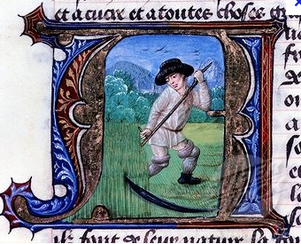
Cutting down myths.
You may harbor some distinct ideas life outside the academy; employers certainly harbor some distinct ideas about what PhDs are like. Let's be frank: these are often not flattering views on either side.
Life outside the academy is pretty complex and it offers a range of options, some of which may fit you and some of which may not fit you. You may be very familiar with some of these options and less familiar with others.
When we decided to leave academia, we were somewhat startled by the ideas some of our academic peers had of the non-academic life and, we'll be candid, we ourselves had some foolish ideas of what life was like outside the academy ourselves. So here we list what we think are the top myths out there on the off-chance that you may harbor some of these myths (we recognize that you may not embrace any of these myths!).
Sadly, many employers also harbor myths about academics as well and unfortunately, these are sometimes not positive myths. Obviously, not every employer nurses these views but you need to be aware that some people do have these ideas so that you can aggressively counter them in your interviews, resume, cover letter, and other materials you may submit for a non-academic job.
Life outside the academy is pretty complex and it offers a range of options, some of which may fit you and some of which may not fit you. You may be very familiar with some of these options and less familiar with others.
When we decided to leave academia, we were somewhat startled by the ideas some of our academic peers had of the non-academic life and, we'll be candid, we ourselves had some foolish ideas of what life was like outside the academy ourselves. So here we list what we think are the top myths out there on the off-chance that you may harbor some of these myths (we recognize that you may not embrace any of these myths!).
Sadly, many employers also harbor myths about academics as well and unfortunately, these are sometimes not positive myths. Obviously, not every employer nurses these views but you need to be aware that some people do have these ideas so that you can aggressively counter them in your interviews, resume, cover letter, and other materials you may submit for a non-academic job.
The World Outside the Ivory Tower
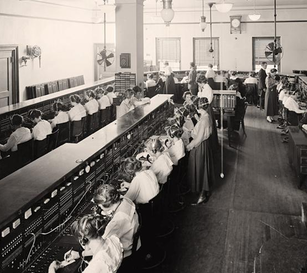
The faceless worker.
Most graduate schools provide little or no career counseling for their students. If you have spent six or more years in the Ivory Tower, you probably do not know much about the non-academic world or non-academic jobs---even if you spent time in the non-academic world before entering graduate school.
Recognize that your understanding of the non-academic world is non-existent or, at best, six or more years out of date. If you have an assumption about a job but have never done an informational interview with someone who works in that field, admit that that assumption is based on a lack of knowledge and is therefore probably incorrect.
There are many myths about the non-academic world and the academic world. We are going to list some of them because we want you to understand that they are myths.
One: people in corporate America are faceless drones who labor in cubicles and are all unhappy.
Two: unless your job title is "Historian," you do not use the skills or training you learned in graduate school.
Three: academic jobs are all wonderful and allow you to engage in scholarly research 24-7.
Four: public historians do History Lite and the field is occupied by people who are not real scholars.
Five: jobs at think tanks and foundations are so rare that an historian will never obtain one and should not bother to try.
Six: independent scholars, even those who possess PhDs, are not really serious historians and their work is not deserving of respect.
Seven: people who did not go to graduate school have never heard of, much less read, the works of Foucault, the Annales School or any other great thinker or great intellectual movement of the twentieth century.
Eight: everyone in the "real" world follows a straight career path.
Nine: people in the "real" world do not understand or value the training a PhD has.
Ten: managers and high-level people simply grind the faces of the poor and oppressed every day and those who work for them become Part of the Problem.
Does Number Ten seem silly? Of course, it does. But Numbers One through Nine are equally silly (although sadly, these statements are commonly accepted as the truth by many PhDs and graduate students). Any PhD who believes these things has failed to do research on this subject; whether you remain in academia or not, you need to understand that these statements are myths which are detrimental not only to your job search but to the historical profession in general.
For a PhD to be ignorant is acceptable---for a PhD to claim to be a scholar but fail to do research and end this ignorance is troubling. You must approach your job search with an open mind and you must understand that the title "historian" is not and never has been reserved for professors. If you want to be a scholar, whether in or out of academia, be open-minded and recognize that your prejudices may be just that---prejudices.
Recognize that your understanding of the non-academic world is non-existent or, at best, six or more years out of date. If you have an assumption about a job but have never done an informational interview with someone who works in that field, admit that that assumption is based on a lack of knowledge and is therefore probably incorrect.
There are many myths about the non-academic world and the academic world. We are going to list some of them because we want you to understand that they are myths.
One: people in corporate America are faceless drones who labor in cubicles and are all unhappy.
Two: unless your job title is "Historian," you do not use the skills or training you learned in graduate school.
Three: academic jobs are all wonderful and allow you to engage in scholarly research 24-7.
Four: public historians do History Lite and the field is occupied by people who are not real scholars.
Five: jobs at think tanks and foundations are so rare that an historian will never obtain one and should not bother to try.
Six: independent scholars, even those who possess PhDs, are not really serious historians and their work is not deserving of respect.
Seven: people who did not go to graduate school have never heard of, much less read, the works of Foucault, the Annales School or any other great thinker or great intellectual movement of the twentieth century.
Eight: everyone in the "real" world follows a straight career path.
Nine: people in the "real" world do not understand or value the training a PhD has.
Ten: managers and high-level people simply grind the faces of the poor and oppressed every day and those who work for them become Part of the Problem.
Does Number Ten seem silly? Of course, it does. But Numbers One through Nine are equally silly (although sadly, these statements are commonly accepted as the truth by many PhDs and graduate students). Any PhD who believes these things has failed to do research on this subject; whether you remain in academia or not, you need to understand that these statements are myths which are detrimental not only to your job search but to the historical profession in general.
For a PhD to be ignorant is acceptable---for a PhD to claim to be a scholar but fail to do research and end this ignorance is troubling. You must approach your job search with an open mind and you must understand that the title "historian" is not and never has been reserved for professors. If you want to be a scholar, whether in or out of academia, be open-minded and recognize that your prejudices may be just that---prejudices.
Employers' Views of PhDs

The mistaken belief that PhDs are high maintenance.
Employers also have concerns about PhDs. Obviously, many of these concerns may not pertain to you. However, for better or worse, this is often what an employer is thinking when he/she reviews a resume with a PhD.
One: What on earth were you doing all those years in graduate school? Eight years? And all you did was write a dissertation? We have major and massive projects that require that we turn something around in a year or less. I am concerned about hiring someone who takes eight years to complete a project.
Two: What does this in-depth knowledge of teahouse culture during the Meiji Restoration have to do with anything? I mean, sure, it sounds interesting but I am concerned that this indicates that you are the kind of person who focuses too much on obscure details and can't see big-picture issues.
Three: You don't have any experience in our field at all?
Four: You seem like a nice person but I suspect that like many PhDs, you are arrogant. I can't imagine that you will be able to function well with our clients or your colleagues.
Five: You seem to be the kind of person who prefers to work alone. That's what you have done for years. I need a team player.
Six: I am concerned about your ability to write in a non-academic style. I am worried that you will use jargon and not communicate clearly.
Seven: You spent eight years in academia. You must like it or you would have left. You'll go running back there soon.
Eight: Academics have no work ethic. None. They take summers off and teach at random hours. I'm skeptical that you really can do what it takes---even to the point of showing up for a 9 to 5 job.
Nine: It's all theoretical to you academics. You lack practical experience and you don't prioritize practical, real-life, solutions to problems.
Ten: Did I mention that you can't hit deadlines? No academic can.
One: What on earth were you doing all those years in graduate school? Eight years? And all you did was write a dissertation? We have major and massive projects that require that we turn something around in a year or less. I am concerned about hiring someone who takes eight years to complete a project.
Two: What does this in-depth knowledge of teahouse culture during the Meiji Restoration have to do with anything? I mean, sure, it sounds interesting but I am concerned that this indicates that you are the kind of person who focuses too much on obscure details and can't see big-picture issues.
Three: You don't have any experience in our field at all?
Four: You seem like a nice person but I suspect that like many PhDs, you are arrogant. I can't imagine that you will be able to function well with our clients or your colleagues.
Five: You seem to be the kind of person who prefers to work alone. That's what you have done for years. I need a team player.
Six: I am concerned about your ability to write in a non-academic style. I am worried that you will use jargon and not communicate clearly.
Seven: You spent eight years in academia. You must like it or you would have left. You'll go running back there soon.
Eight: Academics have no work ethic. None. They take summers off and teach at random hours. I'm skeptical that you really can do what it takes---even to the point of showing up for a 9 to 5 job.
Nine: It's all theoretical to you academics. You lack practical experience and you don't prioritize practical, real-life, solutions to problems.
Ten: Did I mention that you can't hit deadlines? No academic can.
Overturning Employers' Stereotypes

Demonstrate that you have an incredible work ethic.
There are some simple basic ways to get around these concerns (and no, we are not talking about removing the PhD from your resume---that will leave a gap which will probably raise even more questions; additionally, it will mean that it will be difficult for you to reclaim your PhD when you have the job). We'll give you some basic suggestions here but if you read the site thoroughly, you will see that we will provide specific guidance throughout the site, much of it designed to address these concerns.
First, we strongly recommend that you look for and always cite specific examples of deadline-driven projects (or projects which you completed in less than the average time) on your resume and cover letter. If, for example, you finished your dissertation in less than eight years, indicate that you researched and wrote your dissertation in less than the average time. Since the inability to hit deadlines is probably the most pressing concern non-academics have about academics' ability to do the job (heck, even some academics have this belief about their fellow academics), you must address this concern upfront and aggressively. Use specific examples to demonstrate that you can and have consistently hit deadlines.
Second, pitch your time in grad school as evidence of your work ethic. This essay may help you to think you about this.
Third, prove that you can write in a variety of styles. Avoid obvious academic traps (don't submit a dense two page cover letter filled with long convoluted sentences---this will just confirm their belief that you can only write in an academic style). Cultivate experiences which led you to write in a variety of different styles and include these on your resume. Never submit a chapter from your dissertation when they ask for a writing sample. This will just set off red flags. Always determine what kind of writing sample is needed in that field and develop and have that kind of writing sample ready to go.
Fourth, demonstrate that you have worked on team projects. If you haven't done this, this is where (and why) having an internship is good but you can and also should join committees, either as a grad student or a faculty member. Cite not only the committee work but what the committee actually accomplished---be specific.
Fifth, translate your academic experience into the job duties listed. Connect the dots for the employer. Show him/her how your work experience tallies exactly with the job qualifications. Do not expect the employer to do make that connection (he or she is reading a hundred resumes at a clip---he/she doesn't have time to make those connections, especially as so many other applicants have done this).
Sixth, demonstrate how your ability to know and understand details can and does translate into an ability to see the big picture. Provide examples of projects you have done that illustrate the big picture.
Obviously, you will always meet employers who remain skeptical of PhDs but with many people, it really is a matter of demonstrating, with clear and very specific examples, how and why their prejudices about you may be off-base.
First, we strongly recommend that you look for and always cite specific examples of deadline-driven projects (or projects which you completed in less than the average time) on your resume and cover letter. If, for example, you finished your dissertation in less than eight years, indicate that you researched and wrote your dissertation in less than the average time. Since the inability to hit deadlines is probably the most pressing concern non-academics have about academics' ability to do the job (heck, even some academics have this belief about their fellow academics), you must address this concern upfront and aggressively. Use specific examples to demonstrate that you can and have consistently hit deadlines.
Second, pitch your time in grad school as evidence of your work ethic. This essay may help you to think you about this.
Third, prove that you can write in a variety of styles. Avoid obvious academic traps (don't submit a dense two page cover letter filled with long convoluted sentences---this will just confirm their belief that you can only write in an academic style). Cultivate experiences which led you to write in a variety of different styles and include these on your resume. Never submit a chapter from your dissertation when they ask for a writing sample. This will just set off red flags. Always determine what kind of writing sample is needed in that field and develop and have that kind of writing sample ready to go.
Fourth, demonstrate that you have worked on team projects. If you haven't done this, this is where (and why) having an internship is good but you can and also should join committees, either as a grad student or a faculty member. Cite not only the committee work but what the committee actually accomplished---be specific.
Fifth, translate your academic experience into the job duties listed. Connect the dots for the employer. Show him/her how your work experience tallies exactly with the job qualifications. Do not expect the employer to do make that connection (he or she is reading a hundred resumes at a clip---he/she doesn't have time to make those connections, especially as so many other applicants have done this).
Sixth, demonstrate how your ability to know and understand details can and does translate into an ability to see the big picture. Provide examples of projects you have done that illustrate the big picture.
Obviously, you will always meet employers who remain skeptical of PhDs but with many people, it really is a matter of demonstrating, with clear and very specific examples, how and why their prejudices about you may be off-base.